- By
- RV World UAE
- Published
- 10 min read
Start with the Trip, Not the Vehicle
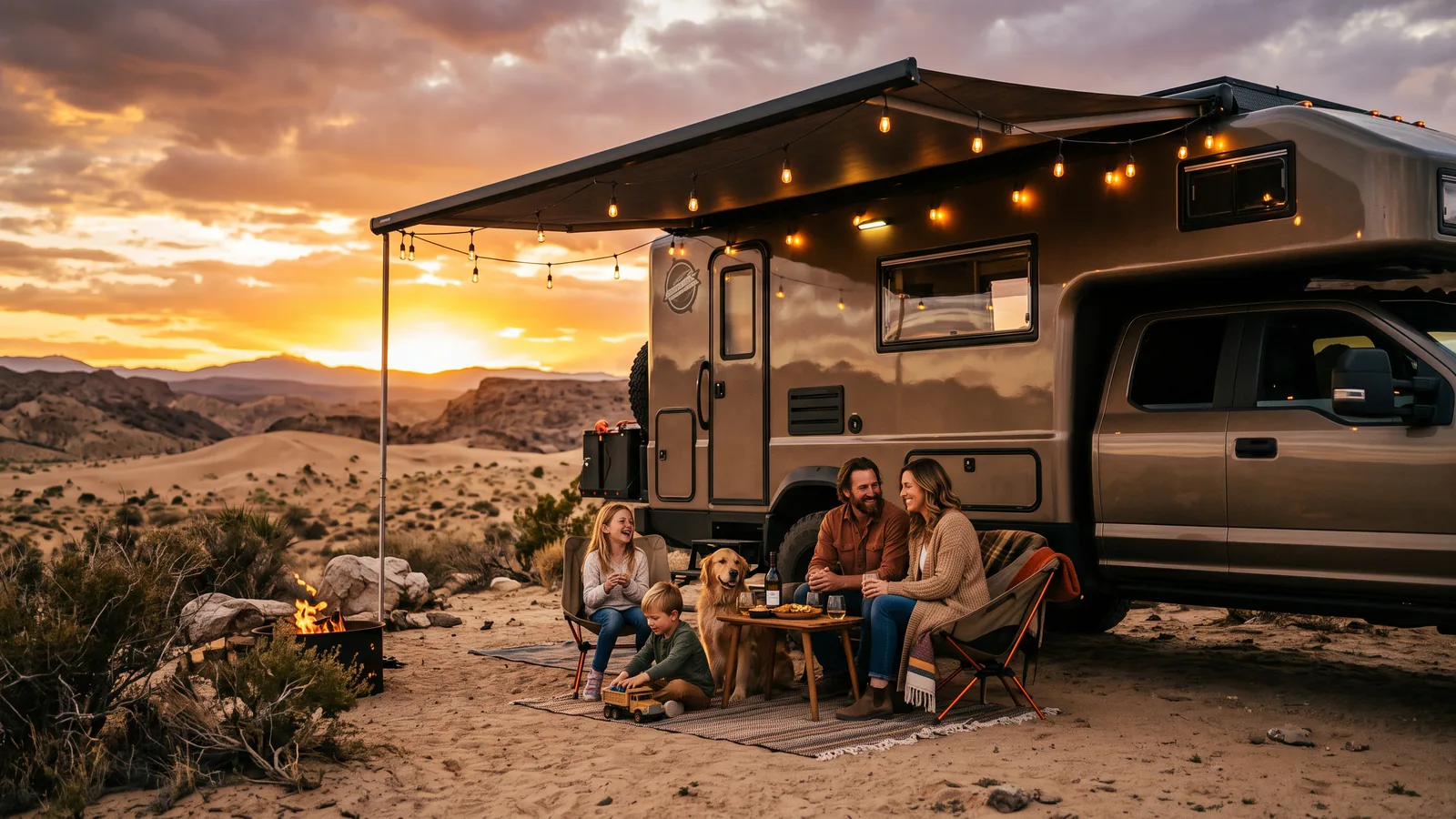
The most common buying mistake is not overpaying. It is buying a vehicle designed for a life the buyer does not actually live. Before you open a single listing, answer three questions honestly.
How many nights a year will you really use it? Not aspirationally. Under fifteen, and renting is almost certainly the better financial decision.
Who is coming? Two adults and a nine-metre Class A is a different proposition to five people and a Class C.
Where are you actually going? Sealed roads to Hatta and the Fujairah coast is one vehicle; gravel tracks and desert edges is another. No motorhome belongs in soft dunes.
The Classes, Briefly
Class A — the big coach. Enormous living space and a commanding drive, but parking is a project and fuel is a line item. Best for people who travel for weeks, not weekends.
Class C — the over-cab, usually on a Fiat Ducato or Mercedes Sprinter chassis. The family default worldwide for good reason: the over-cab bunk is free sleeping space, the footprint is manageable, and parts are available across the UAE. Our most common recommendation.
Class B / camper van — drives and parks like a car, which matters more than people expect. Space is tight. Excellent for couples.
Fifth wheel / travel trailer — you unhitch at camp and keep a normal vehicle for the day, a real advantage. But you need a tow vehicle legitimately rated for the load, and confirm the towing and licence requirements for your combination with the RTA or your emirate's licensing authority before you buy.
Why American Units Suit This Climate
American units (Winnebago, Thor, Forest River, Jayco) are bigger, better cooled from the factory, and usually arrive with a generator already fitted — which matters enormously in this climate. Insulation and AC capacity are specified for real heat rather than a mild summer, so they are comfortable here without a round of upgrades first.
The trade-offs are honest ones: they drink fuel, they are harder to park, and some body parts have long lead times from the US. Plan for both when you budget.
The Thing That Actually Destroys RVs Here
Water ingress and UV. Not engines.
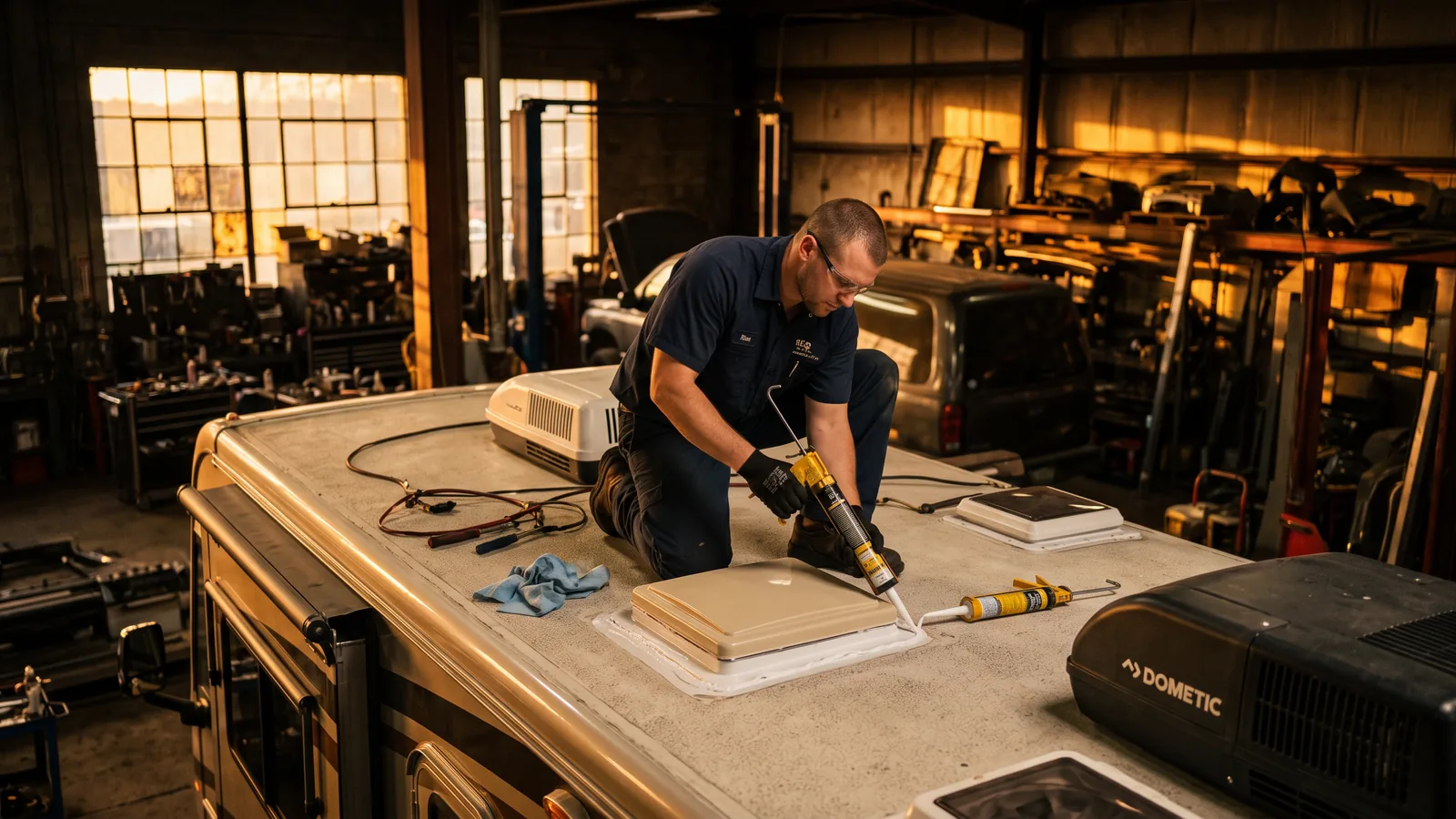
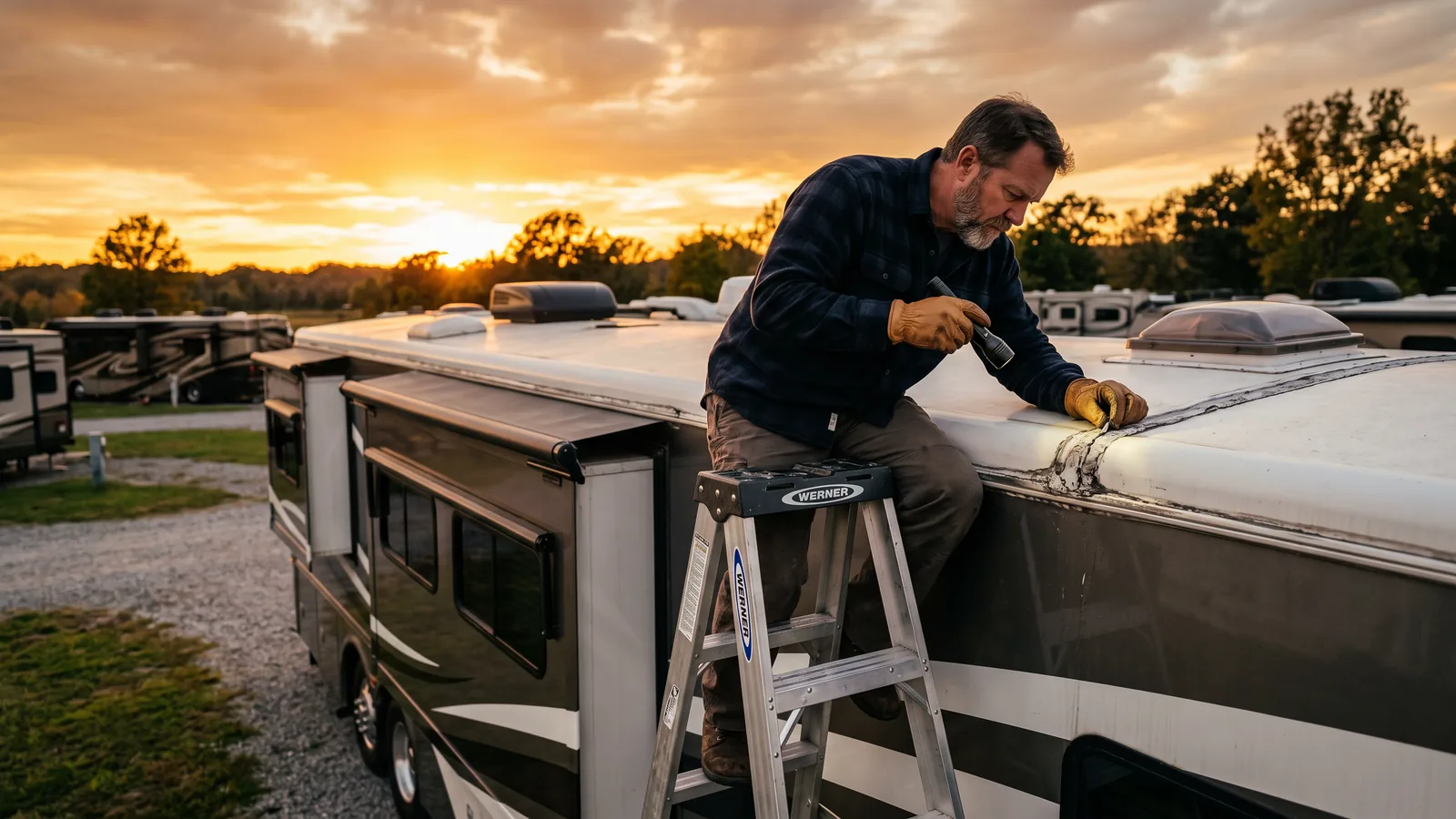
The Gulf sun is relentless, and it attacks the parts nobody inspects. Roof sealant hardens, cracks and lets water in around vents, aerials, skylights and the seams where walls meet roof. Once water reaches a bonded sandwich wall or a plywood floor it delaminates the panel from the inside, and by the time you see a stain the structural damage is done and expensive.
An engine problem is a bill. Water damage in the body is often a write-off. This is the most important thing to inspect, and almost nobody does.
Your Inspection Checklist
The body
- Press every wall panel. Softness or a hollow sound means delamination.
- Moisture-meter the floor along the walls, under windows, around the shower and in the corners.
- Get on a ladder and check sealant around every vent, skylight, aerial and seam.
- A bulge or ripple in the outer skin is water inside the sandwich. Any stain in a locker is a water trail.
The systems
- Run the air conditioning for twenty minutes and measure the output temperature. A unit that struggles in March will be useless in June.
- Start the generator and run it under actual load, not idle. Ask for hours run.
- Test every 12V circuit, the inverter and the batteries under load. Ask the age of the batteries.
- Fill the fresh tank, run every tap, and check the pump, heater and joints for weeping.
- Check the fridge type. Absorption fridges struggle badly above 40°C ambient; compressor fridges handle UAE heat far better.
The vehicle
- Tyres: check the DOT date code, not the tread. RV tyres age out long before they wear out, and UAE heat accelerates it.
- Brakes, suspension and chassis rust — check thoroughly if the unit lived near the coast.
- Service history in writing. No history is a price negotiation at best.
The paperwork
- Registration (mulkiya) matching the vehicle and the seller, and chassis/VIN physically checked against the documents.
- Confirm there is no outstanding finance or lien on the vehicle. This is not optional.
- Accident history, and for an imported unit, proof of legal import and customs clearance.
Buying Imported
An import can be excellent value or a slow disaster. The variables are condition at source, shipping, clearance and registration — a problem at any stage becomes your problem once money has moved.
The one rule: independent pre-purchase inspection at the source, before any payment. Photos lie, and they lie most about the roof and floor damage that matters most. Import requirements and duties vary by vehicle type and change over time — confirm the current position with UAE Customs and your emirate's registration authority.
What We Would Tell a Friend
Rent one first — a weekend teaches more than a month of research. Buy the layout, not the badge. Budget beyond the purchase price for registration, insurance, servicing, storage and the upgrades this climate demands. Walk away from any seller who resists an independent inspection; that resistance is the inspection result.
And check the roof. Always check the roof.
Tags
- Buying Guide
- Sales
- Inspection
- Import
Ready to hit the road?
Message us on WhatsApp and we will tell you exactly what your trip needs.