- By
- RV World UAE
- Published
- 8 min read
Why the UAE Suits an RV
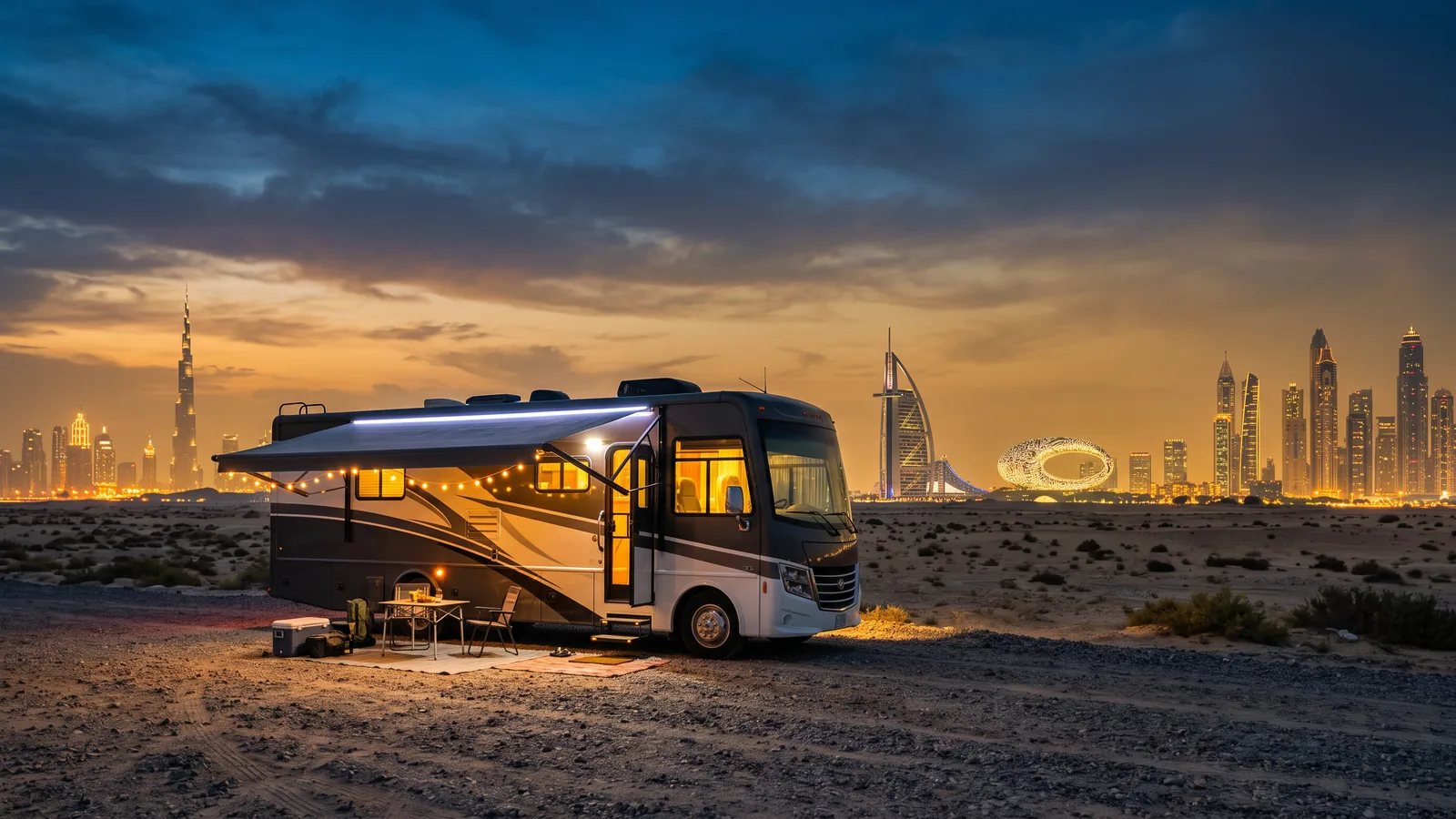
The UAE is unusually good for motorhome travel, and not for the reason most people expect. It is not the scenery on its own — it is the scale. You can leave an apartment in Dubai Marina, be parked beside the water at Al Qudra Lakes within the hour, and stand on the gravel plains under Jebel Jais the same afternoon. Very few countries compress desert, mountain and coastline into a three-hour driving radius. In an RV that compression is the entire point: the vehicle is the accommodation, so moving between two completely different landscapes costs you fuel and nothing else.
The second reason is infrastructure. Fuel stations are frequent, mobile coverage reaches most places you would want to stop, and the road network is excellent. A breakdown here is an inconvenience, not an expedition — which changes the risk calculation for a first-time owner considerably.
The Season Is October to April
Be honest about the calendar. From roughly October to April the UAE is one of the most pleasant camping environments on earth: comfortable daytime temperatures, desert nights that can drop into single figures inland in January, and long stretches of settled weather. This is the season. Plan your year around it.
From May onward the picture changes completely. Inland daytime highs of 45–50°C, combined with coastal humidity that can make the Sharjah and Abu Dhabi shorelines feel worse than the open desert, push RV camping from pleasant into technical. It becomes a power problem rather than a camping problem — see below.
Ramadan shifts the rhythm rather than stopping it. Trips tend to move later — setting up in the afternoon, eating after sunset, and staying up into the cool part of the night. Many families find it the best camping of the year.
Where You Can Actually Park
This is where new owners get into trouble. Not every empty patch of sand is fair game. Large areas of apparently open desert are private land, municipal land, or sit inside protected reserves where access and overnight stays are controlled. Some areas require permits. Rules differ between emirates, and they change.
The honest advice: check before you commit. Confirm current access and overnight rules with the relevant municipality or authority for the specific area you are heading to, rather than trusting a forum post from three years ago.
Areas that are popular and generally straightforward to reach include the tracks around Al Qudra Lakes, the gravel wadi beds near Wadi Shawka in Ras Al Khaimah, the firm ground around Fossil Rock (Al Mleiha) in Sharjah, the approach roads below Jebel Jais, and stretches of the Fujairah and Khor Fakkan coast. Liwa and the edge of the Rub' al Khali are spectacular and deserve a trip of their own — but they are a serious undertaking in a heavy vehicle, not a first weekend.
Heat, Power and Water
Water. Budget roughly four litres per person per day for drinking alone in shoulder-season heat, and more if you are walking or working outside. A 100-litre fresh tank sounds enormous until you add showers and washing up — realistically that is two people for two comfortable days, not four people for a week. Carry drinking water separately from the tank.
Power. A rooftop RV air conditioner typically pulls somewhere in the region of 1,200–1,500 W while running. Solar alone will not carry that through a summer night; the panels a factory fits are sized for European loads, not Gulf ones. Realistic overnight cooling in the hot months means a generator with fuel to spare, a substantially upsized lithium bank, or both.
Fridge. Absorption fridges lose efficiency badly above about 40°C ambient. Compressor fridges cope far better with UAE heat. If you are buying a used unit, check which one you are getting.
Driving on Sand
Getting stuck is, nine times out of ten, a tyre pressure problem. Most drivers running soft sand deflate to somewhere around 15–18 psi, reinflate on the tarmac, and carry a compressor to do it. Deflating spreads the contact patch and floats the vehicle instead of digging it in.
But understand the limits of your vehicle. A Class C motorhome on a Fiat Ducato chassis is not an off-road vehicle — it is a heavy, long van with limited clearance. Firm gravel, graded tracks and packed sand are fine. Soft dune fields are not. Recovering a three-tonne motorhome is a very different exercise from recovering a Land Cruiser, and the bill reflects it.
Never travel alone in soft terrain, carry recovery gear you know how to use, and tell someone your route.
Weather Worth Planning Around
Shamal winds can arrive with little warning and turn a pleasant evening into a sandblasting. Retract the awning before you sleep — every season, someone loses one because they left it out overnight. And never camp in a wadi bed if there is any rain forecast anywhere in the mountains, even if the sky above you is clear. Water arrives from where you cannot see it.
Start by Renting
You will learn more about what you want in one weekend behind the wheel than in a month of reading. Rent before you buy. You will discover whether you actually use the shower, whether your family needs a fixed bed, and whether you have the patience for a nine-metre vehicle in a Dubai car park.
Tags
- Camping
- Beginners
- UAE
Ready to hit the road?
Message us on WhatsApp and we will tell you exactly what your trip needs.